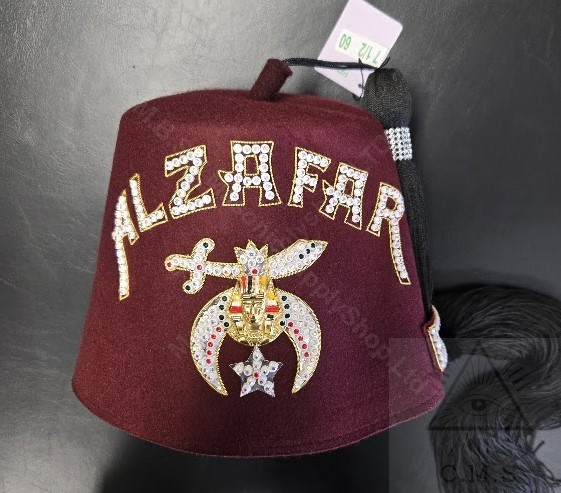
Looking for a fez shop that understands Shrine regalia? Buying a fez is different from buying an ordinary hat. A good fez shop will ask about your Temple, your unit and your office before anything is made, because a Shrine fez is personalized regalia, not an off-the-shelf cap.
For most Nobles, the fez is the single most recognizable piece of Shrine regalia. It is worn at ceremonials, parades, unit events, hospital fundraisers and Temple meetings, and it is often the item a new Noble is proudest to own. Because a good fez is personalized and can last for decades, it is worth taking a little time to understand the choices before you order.
This guide walks through the parts of a fez, the decisions you will be asked to make, and the questions Nobles most often ask. It is written for new Nobles buying a first fez and for long-time members replacing a worn one or adding a unit fez.
The parts of a fez
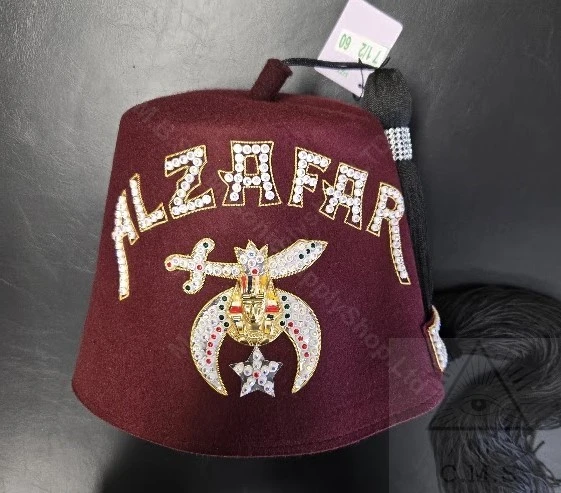
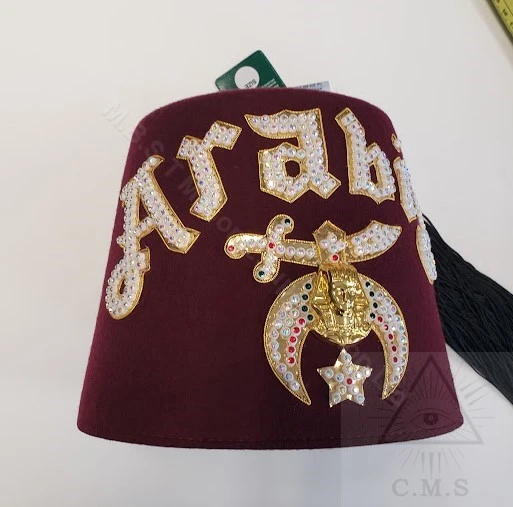
A Shrine fez is a brimless, flat-topped red cap. Most of what makes one fez different from another comes down to three things:
- The emblem. The front carries the Shrine emblem, traditionally the scimitar and crescent with the star.
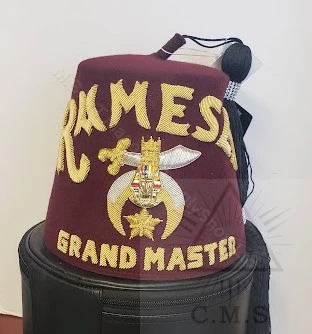
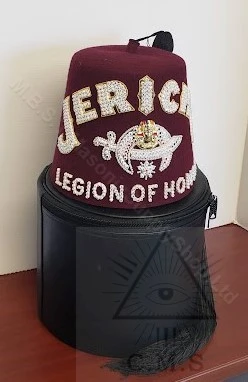
- The lettering. The name of your Temple (also called a Shrine Center) is usually worked in an arc above or around the emblem. Many fezzes also carry a unit name, an office, or a year.
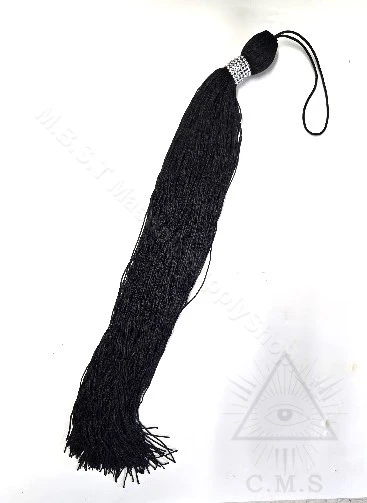
- The tassel. A tassel hangs from a button at the crown. Its color and length can indicate a unit, an office or a rank, depending on local custom.
Embroidered or jeweled?
The biggest decision is how the emblem and lettering are made.
Embroidered fezzes use thread or metallic bullion stitched into the felt. They are lighter, generally less expensive, and stand up well to regular use, which makes them a common choice for a member's everyday fez.
Jeweled fezzes use rhinestones or stones set into the design. They catch the light in a parade or on stage and are often chosen by officers, Divan members or units that want a dressier look. They are heavier and need a little more care in storage.
Many Nobles eventually own both: an embroidered fez for regular meetings and a jeweled one for formal occasions.
Check your Temple's customs first
Before ordering lettering, tassel colors or an office designation, check with your Temple's Recorder or your unit leader. Temples and units often have their own rules about:
- the exact spelling and layout of the Temple name,
- which tassel colors are reserved for officers or particular units,
- whether unit names or years are added, and where.
Getting this right before production avoids a fez you cannot wear to the events that matter.
Fit matters more than you think
A fez that is too tight gives you a headache by the end of a parade, and one that is too loose ends up on the street. Measure carefully before ordering; our fez sizing guide explains how.
What a good fez shop should offer
- Made-to-order lettering with your Temple name spelled and laid out correctly.
- A chance to confirm details such as spelling, tassel color and unit name before production.
- Sizing help, so the fez stays comfortable through a long parade.
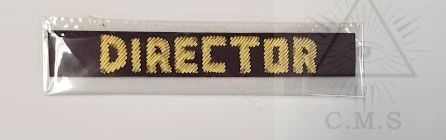
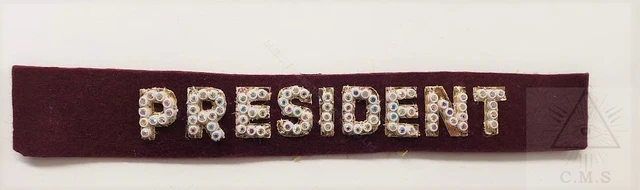
- Replacement parts such as tassels and emblem strips, so a worn fez can be refreshed rather than replaced.
- Fez cases and care advice to protect your investment.
Whether you order online or visit a fez shop in person, ask these questions before you pay.
Where to buy
Masonic Supply Shop carries fezzes and fez accessories for Nobles, along with the wider range of Shrine regalia and gifts.
FAQ
Who can wear a Shrine fez?
The fez is worn by Shriners, also called Nobles. Membership in the Shrine requires that a man first be a Master Mason. For membership questions, visit Shriners International.
Can I wear my fez to any event?
Most Temples have guidelines on when the fez is worn and when it is removed, such as during prayers or the national anthem. Your Temple can tell you its customs.
How long does it take to get a personalized fez?
Personalized lettering means each fez is made to order, so allow extra time before a ceremonial or parade. Ask about current lead times when you order.
Should I buy a fez case?
If you travel to events or own a jeweled fez, a fitted case protects the shape and the stonework. See our fez care tips.